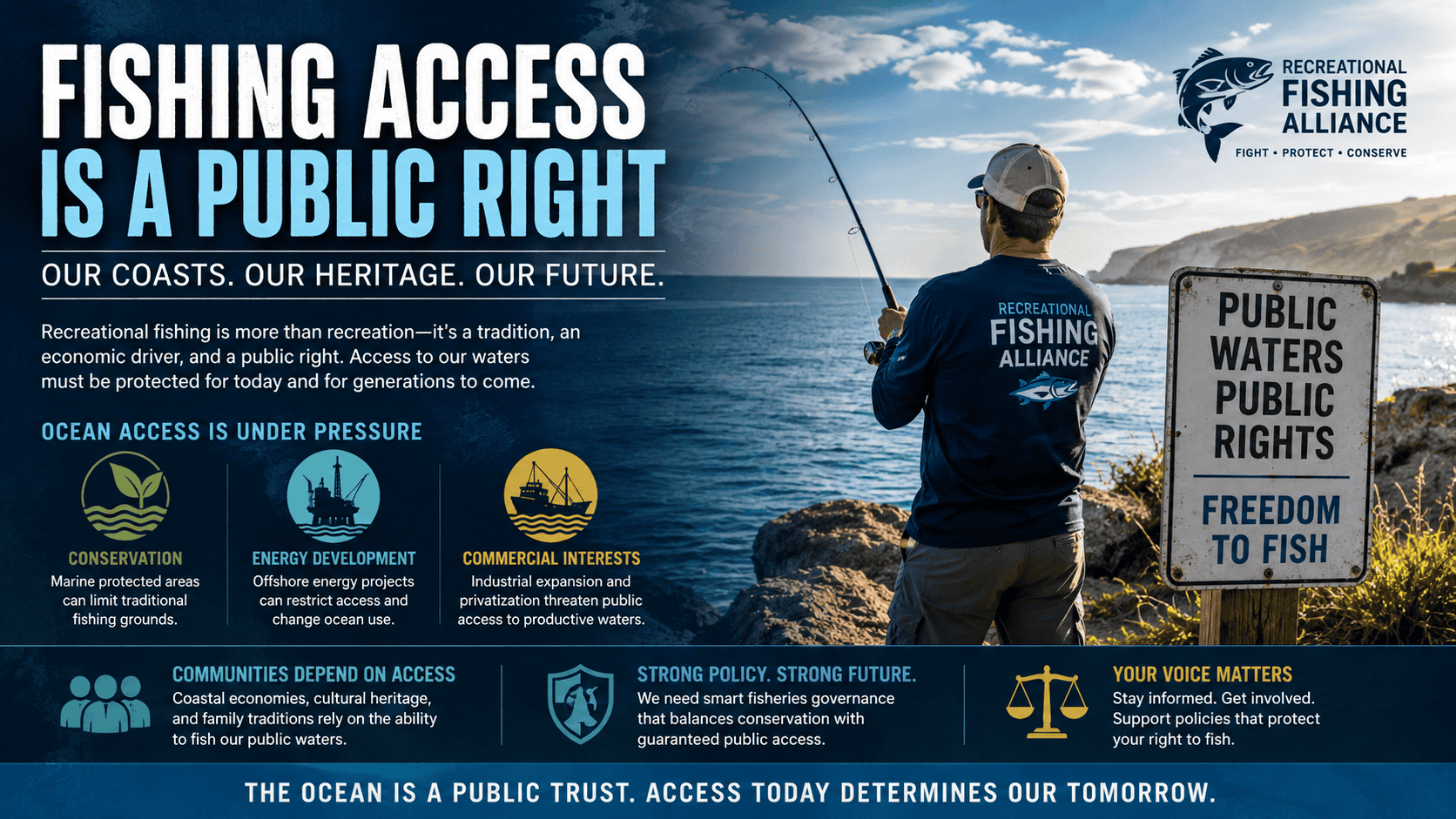
Across the United States, anglers have long benefited from access to public marine resources. Yet access is not guaranteed forever. Fisheries regulations, marine conservation initiatives, offshore development projects, and competing ocean uses increasingly shape who can fish, where they can fish, and under what conditions. Understanding these issues is essential for anyone who values time on the water.
What Are Recreational Fishing Rights?
Recreational fishing rights refer to the ability of citizens to access public fisheries resources for lawful recreational purposes. These rights are not absolute ownership rights over fish stocks or waterways. Instead, they represent a public interest in maintaining reasonable opportunities to fish while balancing conservation objectives and resource sustainability.
The concept is rooted in the idea that marine resources belong to the public and should be managed for the benefit of current and future generations. As a result, anglers often participate in public policy discussions that influence access and management decisions.
Why Fishing Access Matters Beyond Recreation
For many coastal communities, fishing is woven into local identity, tourism, and outdoor culture. Public access points, marinas, piers, and beaches serve as gateways to these experiences. When access is reduced, communities can lose economic activity, outdoor opportunities, and connections to maritime heritage.
Discussions surrounding recreational fishing rights often extend beyond fishing itself. They involve questions about public resource ownership, coastal development, environmental stewardship, and equitable access to outdoor recreation.
Policy Pressures Affecting Anglers Today
Modern marine policy involves balancing many competing interests. Conservation organizations seek habitat protection. Commercial operators require access to working waters. Energy developers pursue offshore projects. Shipping and transportation corridors continue to expand.
In this increasingly crowded environment, debates about fishing access policy have become more common. Restrictions designed for environmental protection may sometimes limit recreational opportunities. Likewise, infrastructure development can alter access routes that anglers have used for decades.
These debates rarely have simple answers. Effective fisheries governance requires evaluating ecological impacts while recognizing the social and economic value of recreational fishing.
The Role of Public Participation in Fisheries Management
Fisheries management in the United States often relies on public input through councils, advisory panels, and comment periods. Anglers, charter operators, scientists, and conservation groups all contribute perspectives that help shape management decisions.
Understanding how public fisheries access is managed allows anglers to participate more effectively in policy discussions. Public engagement helps ensure that decisions reflect a broad range of interests rather than a narrow set of stakeholders.
Organizations such as the Recreational Fishing Alliance have historically encouraged anglers to stay informed and involved in fisheries policy debates affecting access and management.
Conservation and Fishing Rights Are Not Opposing Goals
Some policy debates incorrectly frame conservation and recreational access as opposing interests. In reality, healthy fish populations are essential for sustainable recreational fishing opportunities.
Responsible management measures, science-based harvest limits, habitat restoration projects, and effective stock assessments all contribute to long-term access. Conservation efforts are often most successful when anglers are viewed as partners rather than obstacles.
Many recreational fishing advocates support conservation measures when they are transparent, scientifically justified, and designed to achieve measurable outcomes.
The Future of Freedom to Fish
The coming decades are likely to bring increased competition for ocean space. Offshore wind development, marine protected areas, climate adaptation initiatives, and evolving fisheries regulations will continue shaping access opportunities.
These trends make the concept of freedom to fish increasingly relevant. Future discussions will not simply focus on catch limits or seasons. They will also involve broader questions about who has access to public waters and how those resources should be shared among competing users.
Understanding why access decisions affect coastal anglers will become increasingly important as policymakers navigate these complex challenges.
Frequently Asked Questions
Do recreational fishing rights guarantee unlimited access?
No. Recreational fishing rights exist within a framework of laws and regulations designed to protect fisheries resources and public interests.
Why are fishing access debates becoming more common?
Ocean space is increasingly used for conservation projects, energy development, transportation, and commercial activities, creating new access challenges.
How can anglers participate in fisheries policy decisions?
Anglers can attend public meetings, submit comments during regulatory processes, join advocacy organizations, and stay informed about management proposals.
Related Reading
Why This Topic Matters
Recreational fishing contributes far more than individual enjoyment. It supports local economies, strengthens community ties, encourages conservation awareness, and connects people to public natural resources. As marine policy grows more complex, protecting reasonable public access will remain a central challenge. Understanding recreational fishing rights helps anglers engage in these discussions and support a future where conservation, public access, and sustainable fisheries can coexist.